The note taker
You have a voice memo from a walk and need an editable draft, not another audio file to replay.
Keep the original recording while you review and correct its transcript.
how do i convert my voice recording into textMobile transcription
If you’re asking how do i convert voice to text on my phone, first decide whether you’re speaking now or working from a saved recording. The right method depends on where the words need to end up.
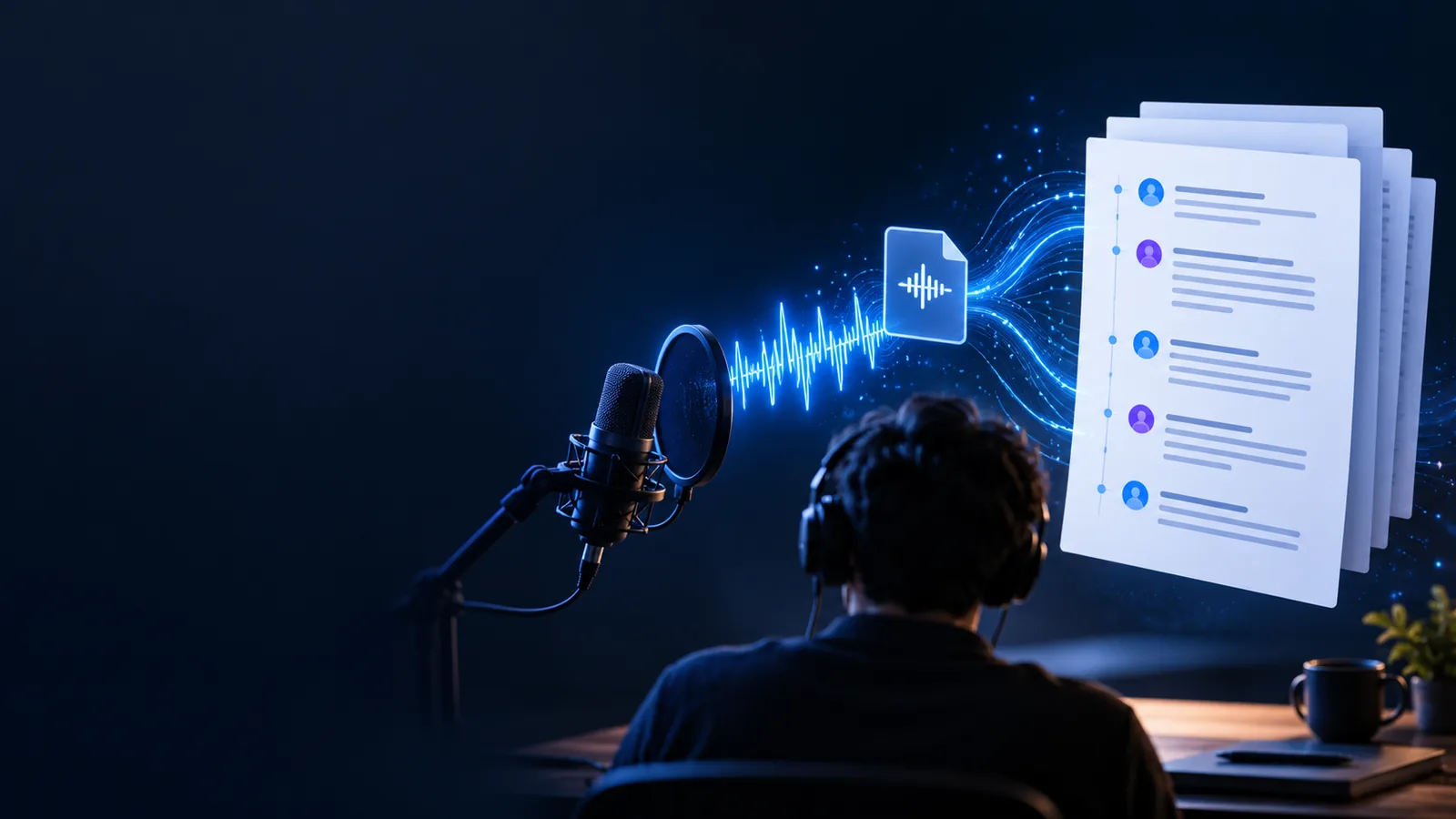
A phone can capture speech easily, but dictating into a text field, reading live captions, and transcribing a recording solve different problems.
You have a voice memo from a walk and need an editable draft, not another audio file to replay.
Keep the original recording while you review and correct its transcript.
how do i convert my voice recording into textYou want to follow speech as it happens, without waiting until the meeting ends.
Consider live captions, then verify whether your chosen method can save any text you need.
live audio to text converterSomeone sent you a recording rather than speaking into your phone’s microphone.
Check the file’s format before choosing a recording-transcription workflow.
mp3 audio to text converter online freeThe recording includes names, client details, or a conversation with another person.
Check consent and the service’s data practices before sharing the audio.
is voice to text converter safe redditChoose the workflow by whether the speech is happening now and whether you need to keep the resulting words.
Open a notes, messages, or document app. Tap a text field, select the keyboard’s microphone if available, speak in short phrases, and proofread before sending or saving. This is usually the simplest route for your own spoken draft.
Find the recording in your phone’s recorder or files app. If it offers a transcript, review it there; otherwise, check which file types a transcription service accepts before sharing the recording. Keep the audio until you have checked the names, numbers, and missing words.
Look in your phone’s accessibility settings for live caption features and check what audio sources they support. Captions help you read along, but they may not create a document you can export. If you need a lasting transcript, plan a separate recording and transcription step.
A short memo saying “Call Maya Thursday about the revised outline” might become that sentence in a note. Verify the name and day against the audio before acting on it.
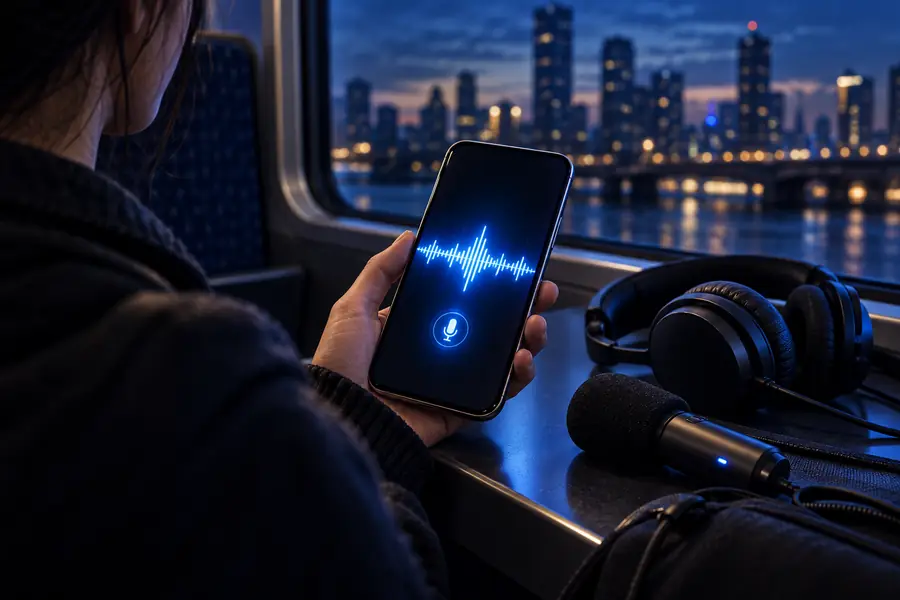 Saved voice memo
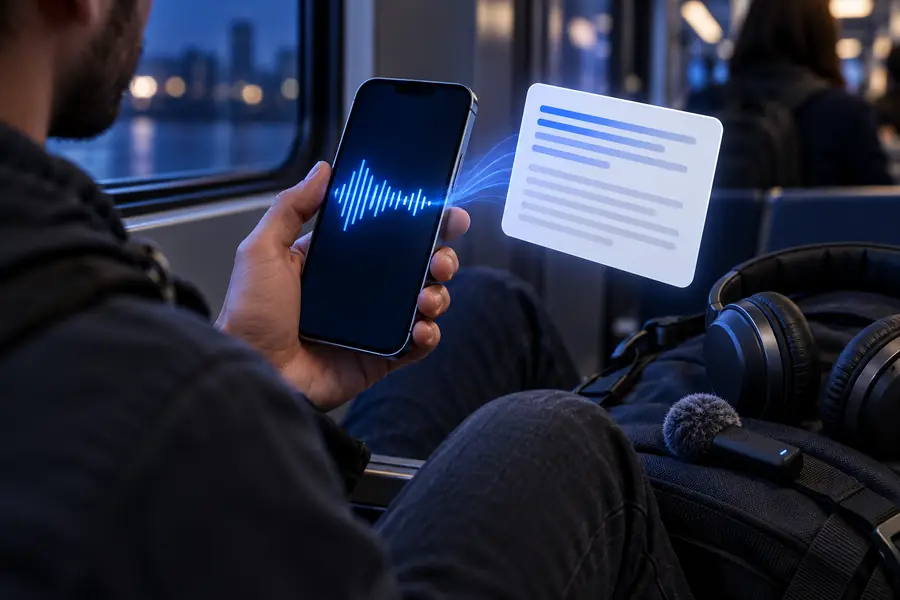 Text to review
Before sharing a recording, consider where processing happens, whether text can be saved, and who is allowed to hear the source audio.
Starting point
Keyboard dictation
You speak into an active text field.
Saved-recording transcription
You begin with an existing audio recording.
Typical result
Keyboard dictation
Words appear in the app where you dictated.
Saved-recording transcription
A separate transcript draft may be produced.
Audio to revisit
Keyboard dictation
Not necessarily retained by the text app.
Saved-recording transcription
The original file can be kept for checking.
Best use
Keyboard dictation
Composing a short note or message.
Saved-recording transcription
Reviewing a memo, interview, or longer talk.
Corrections
Keyboard dictation
Edit the text as you speak or afterward.
Saved-recording transcription
Compare uncertain passages with the audio.
Privacy check
Keyboard dictation
Review your keyboard and phone settings.
Saved-recording transcription
Review sharing permissions and the service’s data policy.
Describing a voice memo does not give a service access to its audio. Available input options must be checked after opening the linked service.
Workaround
Keep the recording on your phone and confirm the service accepts its file type before sharing it.
A live caption feature can display speech without providing a reusable text file.
Workaround
Test whether your phone lets you retain the text before relying on captions for notes.
Names, dates, accents, background noise, and overlapping voices can change the meaning of a draft.
Workaround
Replay the source audio and correct consequential details yourself.
Being able to record or share audio does not establish consent to transcribe someone else’s speech.
Workaround
Get any required permission and review applicable rules before recording or sharing.
Open the linked service to check its current recording inputs and decide whether they fit your phone’s file. Keep your source audio so you can verify the resulting text.
Explore transcription optionsFor words you are speaking now, tap a text field and look for the microphone on your phone’s keyboard. For an existing recording, check whether your recorder offers a transcript or whether a transcription service accepts the saved file. Review the text against the audio before using it.
Yes, if your phone’s recorder has a transcription feature or you use a service that accepts the recording’s file type. Save the original memo so you can replay unclear sections. Available features vary by phone, app, and service.
No. Keyboard dictation places words into the text field while you speak; recording transcription starts with audio you have already saved. If you need to check exactly what was said later, retain the source recording.
Not necessarily. Live captions are designed to display speech as it happens, and whether you can retain or export that text depends on the feature you use. Test it before relying on it to create meeting notes.