Voice To Text

Live transcription

Find a live audio to text converter for speech as it happens

A live audio to text converter is meant to display words while someone speaks, rather than wait for a finished recording. Check microphone access, transcript review options, and the actual service’s capabilities before relying on it for an event.

Check live-input support before starting
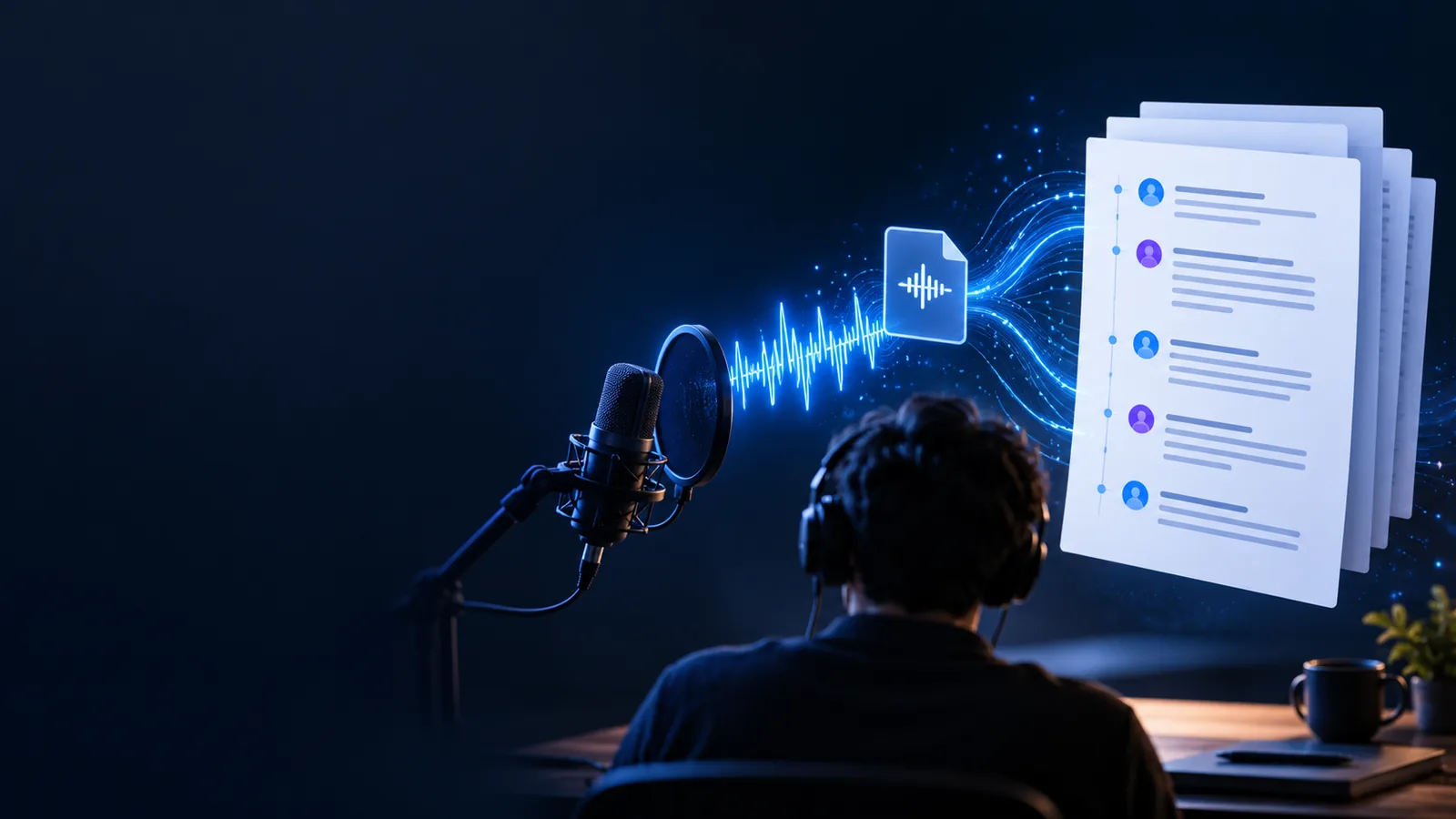
Voice To Text landing-page visual

This entry point versus the general one

The right route depends on whether the speech is happening now or already saved. These related guides cover the other starting points.

The three jobs that call for live text

Live transcription is useful when seeing words during speech changes what you can do next. These situations call for different preparation, not a promise of perfect output.

Interviewers

You want to spot a missed name or unclear answer before the guest leaves.

Visible text can prompt an immediate follow-up. Keep a recording, with permission, if you need to verify quotations afterward.

how do i convert my voice recording into text

Meeting note-takers

A discussion moves quickly and you need to track decisions while people are still talking.

A running draft can help you flag action items, but confirm owners and deadlines with the participants.

voice to text converter vs transcribe

Phone users

You need to capture spoken ideas away from a desk.

Choose a phone-compatible input method and test it before the conversation; microphone access varies by device and browser.

how do i convert voice to text on my phone

How to start

Confirm the service accepts live microphone input before treating it as a real-time tool.

  1. 1

    Check the input

    Open the service and look for a live microphone option. If it only accepts uploads, record the speech first and use its file-conversion path instead.

  2. 2

    Test a short passage

    Grant microphone permission only if you are comfortable doing so. Say a few sentences, then check whether text appears during speech and whether names and punctuation need correction.

  3. 3

    Review before sharing

    After speaking, compare the draft with what was actually said. Verify that the service offers the saving or copying method you need before beginning a long session.

Live and recorded transcription compared

A live workflow prioritizes text during speech; a recorded workflow starts with audio you can replay. Availability of either workflow depends on the service you choose.

Live microphone workflow
Recorded-audio workflow

Starting material

Live microphone workflow

Speech happening now

Recorded-audio workflow

An existing audio recording

When text becomes useful

Live microphone workflow

During speech, if real-time display is supported

Recorded-audio workflow

After the recording is submitted and processed

Chance to clarify

Live microphone workflow

Ask the speaker while they are present

Recorded-audio workflow

Replay the source, or ask later if possible

Connection interruption

Live microphone workflow

May disrupt capture unless audio is also recorded

Recorded-audio workflow

The source file remains available for another attempt

Typical preparation

Live microphone workflow

Check microphone permission and input quality

Recorded-audio workflow

Check file availability and accepted formats

Best review habit

Live microphone workflow

Correct uncertain words while context is fresh

Recorded-audio workflow

Compare the draft against replayed audio

Limits to plan around

Real-time text is a working draft, not an independent record of everything that happened.

It cannot recover missed speech

If the microphone fails, someone speaks too quietly, or a connection drops, the missing words may never reach the transcription service.

Workaround

Where appropriate and permitted, make a separate recording and check the input before the event.

It cannot guarantee exact quotations

Overlapping voices, unfamiliar names, accents, and background noise can change the text. A confident-looking sentence may still be wrong.

Workaround

Mark uncertain passages and verify important wording against audio or with the speaker.

It cannot establish privacy on its own

A live microphone may transmit sensitive conversation. This page does not establish any provider’s storage, retention, or deletion practices.

Workaround

Read the chosen service’s privacy terms and obtain any consent your situation requires.

It cannot promise an export method

Copying, downloading, and retaining a transcript are service-specific features, not automatic results of live capture.

Workaround

Test the end-to-end workflow with non-sensitive speech before an important session.

Choose a workflow you can verify

Prepare your next transcription

Use Voice To Text to explore the available service, then confirm that it supports your intended input before sharing audio. For live speech, test microphone capture, review the resulting words, and check how you can keep the transcript.

Explore transcription options
  • Test with non-sensitive speech first
  • Confirm live-input support
  • Review important wording

Live transcription questions

It is a tool intended to turn speech into visible text while the speech is taking place. That differs from uploading a completed recording and waiting for a transcript. Check the specific service to confirm it actually offers live microphone capture.

Some workflows can display text from a microphone without requiring you to upload a recording first. That does not tell you whether the service retains audio or transcript data. Check its controls and privacy terms before capturing sensitive speech.

It can provide a useful draft, especially when you review decisions while participants are still available. Noise, overlapping speakers, and names can produce errors. Confirm consequential notes with the people involved rather than treating the draft as a final record.

Check whether microphone permission, the selected input device, or the connection has changed. Try a short test sentence before resuming. If the missing passage matters and you have a permitted recording, use that audio to fill the gap.

Use a live workflow when you need to act on words during a conversation, provided the service supports it. Use a recording-first workflow when replay and careful post-event review matter more. For important events, a permitted backup recording can help you verify a live draft.

Convert voice
Convert voice