File support is not guaranteed
An online service may accept recordings without accepting every MP3 file, size, or encoding.
Workaround
Check its current upload requirements before sharing the recording.
Recorded audio
An MP3 holds the recording; a transcript makes its spoken content easier to search, quote, and edit. Check the tool’s supported inputs and access terms before sharing your file.
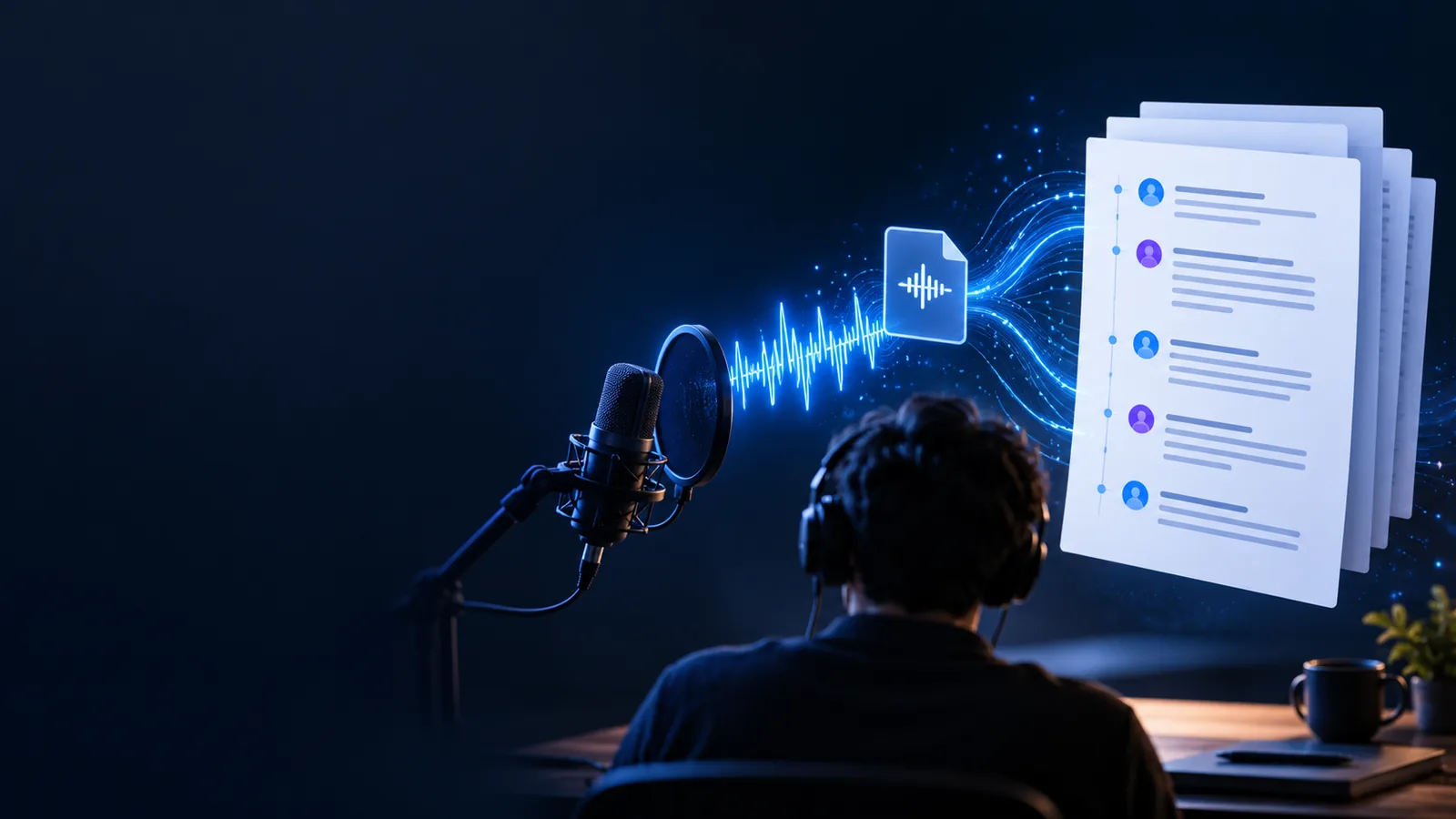
A voice to text converter can turn speech in a saved recording into written words. This page focuses on MP3 input, not speech captured live through a microphone.
An online service may accept recordings without accepting every MP3 file, size, or encoding.
Workaround
Check its current upload requirements before sharing the recording.
The search phrase includes “free,” but it does not establish the destination’s current access terms or limits.
Workaround
Review the destination’s terms before uploading or committing to a workflow.
Background noise, overlapping voices, names, and specialist terms can cause errors.
Workaround
Keep the original MP3 and review important passages against it.
A recording may contain personal information, and handling policies depend on the service used.
Workaround
Read the service’s privacy and retention policies before submitting sensitive audio.
Text helps you locate a quote without replaying an entire MP3. It also gives you a draft to correct before using the recording in notes, an article, or a report.
Play the MP3 first to confirm it contains the intended speech. Note any sections with heavy noise, multiple speakers, or names that will need a closer review.
Confirm that the voice to text converter accepts your file and review its access and privacy terms. Describe whether you need verbatim wording or a cleaner draft.
Compare the resulting words with the MP3 before quoting them. Correct names, figures, and unclear passages rather than treating automated output as a final record.
Start with the type of audio you have. These related guides address access questions, recording workflows, and live speech rather than assuming every task needs an MP3 upload.
These are workflow differences, not promises about which inputs a particular voice to text converter supports. Confirm the destination’s current capabilities before proceeding.
Starting input
Saved MP3 recording
An existing audio file
Live microphone speech
Speech captured as it happens
When speech occurs
Saved MP3 recording
Before the transcription session
Live microphone speech
During the transcription session
Preparation
Saved MP3 recording
Locate and play the correct MP3
Live microphone speech
Choose a quiet place and check the microphone
Source for review
Saved MP3 recording
The original file, if retained
Live microphone speech
A recording only if one is separately made and retained
Typical task
Saved MP3 recording
Draft text from an interview or voice memo
Live microphone speech
Capture notes from speech in progress
Support to confirm
Saved MP3 recording
Accepted MP3 encoding and file limits
Live microphone speech
Microphone access and live-input support
Different recordings call for different checks. A transcript helps most when someone can return to the source audio to resolve uncertain wording.
You have an MP3 interview and need to find a quotation.
Draft the transcript, then replay the quoted passage before publication.
how do i convert my voice recording into textYou recorded a lecture and want searchable study notes.
Check technical terms against the MP3 before relying on the notes.
free audio to text converterA meeting has not happened yet, so there is no MP3 to submit.
Consider a live workflow and confirm whether the service supports it.
live audio to text converterUse Voice To Text to move toward a transcription workflow. Before submitting an MP3, check the destination’s supported files, access terms, and privacy policy; afterward, verify important wording against your recording.
Transcribe my recordingSome services offer an access option for MP3 transcription, but the phrase “free” does not confirm a particular service’s current terms. Check file support, usage limits, and any conditions at the destination before uploading.
Confirm that the service accepts your file’s format, encoding, and size. If the recording contains sensitive speech, read its privacy and retention policies before you submit it.
Do not assume an automated transcript is exact. Replay passages containing names, numbers, overlapping speakers, or noise, especially before quoting or sharing the text.
No. An MP3 workflow starts with a recording that already exists, while live transcription takes speech as it happens. A service may support one, both, or neither input, so check its current capabilities.